
Signs you need this
- • Cracks that keep coming back over doors and windows, or a spiderweb of fine cracks across an old ceiling
- • Walls that sound hollow or feel loose when pressed, or a section bulging away from the lath
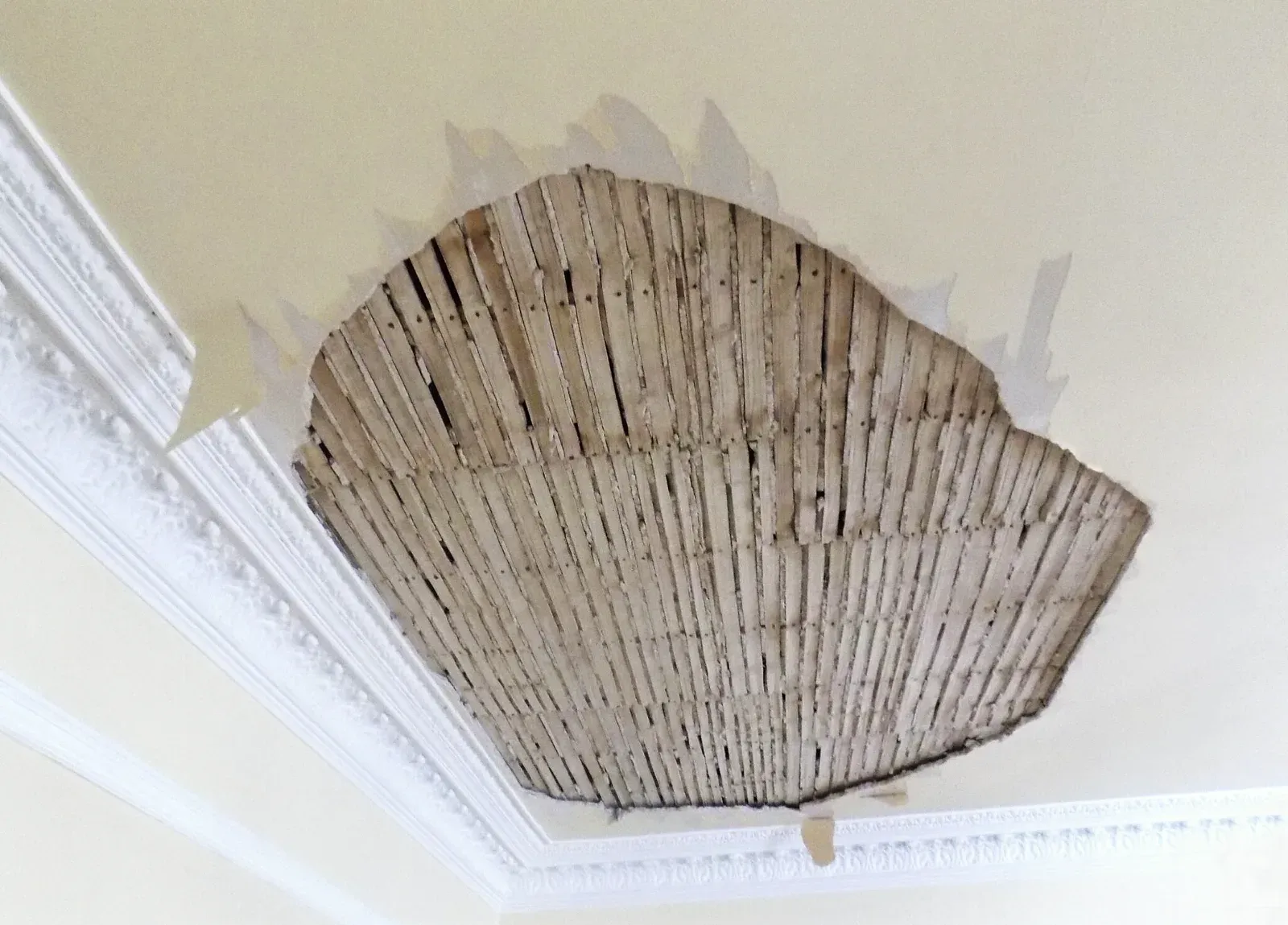
- • Chunks of plaster falling, or wood lath exposed behind a hole
- • A ceiling sagging in the center of a room
- • A crack or bulge that has clearly gotten worse, or prep before painting an old house
- • Buying or selling a pre-1940 home and wanting the walls right before photos or an inspection
Plaster Repair and Plaster-to-Drywall Conversion in Providence
Providence Premier Drywall repairs original lath-and-plaster walls and ceilings, and where the plaster is too far gone, converts the surface to drywall while keeping the flat, hard look of the original. The call is made wall by wall: stabilize and skim what is sound, or remove it and hang new board, so an old house keeps its character without the constant cracking.
What lath-and-plaster is, and why it fails
Most of Providence’s older homes are built the same way behind the paint: horizontal wood lath nailed to the framing, with plaster pushed through the gaps so it oozes and hardens into keys that grip the lath from behind. It is a hard, dense, quiet wall, and it can last a century. What kills it is movement and age. As the house settles and the wood lath dries and shifts, those keys crack and break off, and the plaster loses its hold. That is why the crack over your doorway keeps reopening no matter how many times it is painted, and why a whole ceiling can begin to sag while the wall below stays fine. A contractor who only knows drywall tends to treat every one of these the same way, filling the crack on the surface and leaving the loose plaster behind it to move again.
Save it or convert it, decided wall by wall
The real skill in this work is knowing when to keep the plaster and when to let it go. On College Hill, the East Side near Brown and RISD, in Fox Point, and across the pre-1940 stock, each wall gets press-tested to feel where it is still tight to the lath and where it has let go. Where it is sound but cracked, it gets refastened with plaster washers that pull the plaster back against the lath, then filled and skim-coated so the original wall stays. Where large areas are bulging or the keys are gone, chasing the failure costs more than fixing it: the plaster and lath come out to the framing and new board goes up, which gives a stable, modern substrate. Some owners want the true hardness of plaster back, and for them veneer plaster can be installed over blueboard. The choice is not ideological, it is what each wall can actually hold.
Matching the old look so the repair disappears
Converting or repairing an old wall is only half the job; the other half is making it match. Original plaster reads flat and hard, and a soft, slightly wavy drywall patch stands out badly under the raking light that comes across a wall from a window or a sconce. The work is skim-coated to a smooth, dead-flat finish, feathered well into the sound adjacent plaster, and matched for texture and trim reveal so the wall reads as one continuous surface. Because nearly all of this housing predates 1978, the work runs lead-safe under EPA RRP with proper containment, which keeps the dust from old painted plaster out of the rest of the house. The result keeps the character buyers and owners want in an old Providence home, without the recurring cracks that character usually comes with.
Materials & standards
Products & materials we use
- Plaster washers
- Veneer/basecoat plaster (Structo-Lite)
- Blueboard
- Setting-type compound
- PVA primer
Standards & codes we work to
- GA-214 finish Levels (Level 5 for smooth)
- EPA RRP (pre-1978 lead-safe work)
- RI CRLB registration
What the terms mean
- Lath and plaster
- Plaster keys
- Skim coat
- Veneer plaster
- Plaster-to-drywall conversion
- Raking light
- Feathering
Options & variants
| Option | When it applies | Cost |
|---|---|---|
| Stabilize & skim existing plaster | Plaster is sound but cracked or loosening | Lower; keeps the original substrate |
| Plaster-to-drywall conversion | Plaster is failing widely or has lost its keys | Higher; full removal and new board |
| Veneer plaster over blueboard | Owner wants true plaster hardness with a modern install | Mid to high; specialty finish |
What affects cost
- • Whether the plaster can be saved and skimmed or has to come out entirely
- • How much of the wall or ceiling has lost its keys, the plaster nubs that grip the lath
- • Ceiling versus wall, and the finish level the room needs under its light
- • Lead-safe handling required in pre-1978 homes, which covers nearly all of this housing stock
- • Matching adjacent original plaster profiles, trim depth, and texture
What to expect
- 1
Describe the damage
You call and describe the cracking, bulging, or fallen plaster, and the age of the home.
- 2
Assess wall by wall
Providence Premier Drywall press-tests each affected wall and ceiling and decides stabilize-and-skim versus convert.
- 3
Set up lead-safe containment
Dust containment goes up under EPA RRP and the room is protected before any work starts.
- 4
Repair or convert
Loose plaster is refastened to the lath with plaster washers and filled; failing sections are removed down to the framing and replaced with new board.
- 5
Skim-coat to match
The surface is skim-coated to a smooth, flat finish that matches the hard look of the original plaster, feathered into sound adjacent walls.
- 6
Sand, prime, and texture-match
The wall is sanded, primed paint-ready, and any existing texture is matched.
- 7
Clean up and walk through
Plaster and lath debris is cleared and the finished room is walked through with you.
When this isn’t the right call
- If it is a single small hole in otherwise sound plaster, Drywall Repair & Patching covers it.
- If the ceiling is water-stained from a leak rather than failing from age, Water Damage Drywall Repair is the better fit.
- If you want a dead-flat smooth wall over sound plaster without a conversion, Skim Coat & Level 5 Finish fits better.
Frequently asked questions
Should I repair the plaster or convert it to drywall? +
It depends on the wall. If the plaster is sound and just cracked, Providence Premier Drywall can refasten and skim it and keep the original substrate. If large areas have lost their keys to the lath and are bulging or falling, converting to drywall is more durable and often costs less than chasing failing plaster. The call is made wall by wall.
Will a drywall conversion look wrong in my old house? +
Not if it is done right. The new board is skim-coated to the same flat, hard look as plaster and feathered into the adjacent original walls, so the trim reveals and surfaces match. The goal is that you cannot tell where plaster ends and board begins.
Why do my plaster cracks keep coming back after I paint? +
Because paint does not fix a structural crack. Old plaster moves as it loses its grip on the lath, and the same crack reopens. Stabilizing the plaster and treating the crack properly is what keeps it closed.
Is old plaster dangerous to disturb? +
Pre-1978 homes can have lead paint on the plaster, so the work runs lead-safe under EPA RRP with containment. That protects your household during the job.