
Signs you need this
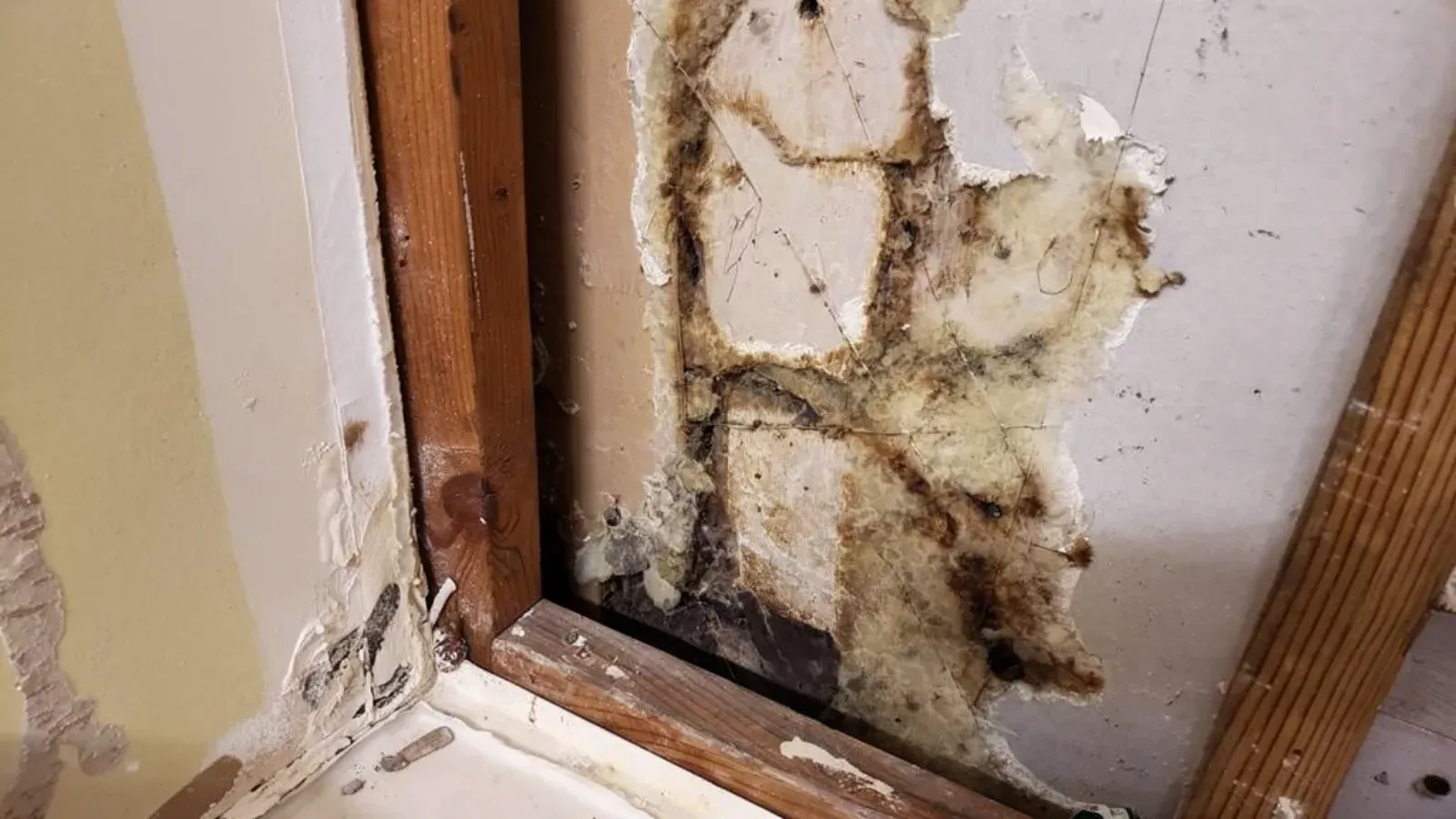
- • Black, green, or grey spotting on a wall or ceiling, often in a basement, bathroom, or below a past leak
- • A persistent musty smell in a room even when everything looks dry, or drywall that is soft, dark, and crumbling at the base
- • Allergy-like symptoms that ease when the household leaves the house
Drywall is one of the friendliest surfaces mold can find. The paper facing is organic, the gypsum core holds moisture, and once mold takes hold it grows into the material rather than sitting on top of it. That is the key thing homeowners are surprised by: a colonized panel cannot be wiped or bleached back to safe. Surface treatment kills what is visible and leaves the roots in the board to return with the next humid stretch. So the honest fix is removal. Providence Premier Drywall cuts out the affected board, bags it on the way out so spores are not carried through the house, and checks what is behind it, since the insulation and sometimes the framing hold moisture and growth too. The wall is then rebuilt with new material. Cleaning has a place on the nonporous surfaces around the problem, but the drywall itself comes out.
This work is common here for a reason. Providence’s housing is old, dense, and humid. Basements under century-old foundations breathe damp, bathrooms in triple-deckers and pre-1940 homes were not built with today’s ventilation, and Narragansett Bay keeps the summer air heavy. Add a slow past leak that someone painted over, and a wall quietly grows mold behind the finish until the smell or the staining gives it away. Before replacing anything, Providence Premier Drywall confirms the water source is actually resolved, because mold is a symptom of moisture, and rebuilding over an unfixed leak just restarts the cycle. In chronic-damp areas, standard gypsum does not go back up. Moisture-resistant board such as USG Mold Tough, Gold Bond XP, or DensArmor takes its place, since it does not give mold the paper and moisture it needs, so the rebuilt wall resists what the original wall could not.
Doing this right means containing the work. The area gets sealed before a wall opens so spores do not drift into living space, debris stays bagged, and the rebuild finishes to a clean, sound surface, taped, coated, texture-matched, and primed. Providence Premier Drywall is a drywall specialist and stays clear about where that lane ends: a small, localized patch of mold from a fixed leak is squarely drywall work, handled start to finish. A large, structural, or recurring infestation belongs with a licensed remediation company first, with Providence Premier Drywall coming in behind them to rebuild the walls and ceilings once the space is cleared. In pre-1978 homes, work proceeds lead-safe under EPA RRP, since old painted surfaces and mold problems often live in the same rooms. The point throughout is a wall that is not just clean-looking but actually safe to close up and live with.
Materials & standards
Products & materials we use
- USG Mold Tough / PURPLE
- Gold Bond XP / eXP
- DensArmor
Standards & codes we work to
- ASTM C1396
- EPA RRP (pre-1978 lead-safe)
- EPA mold guidance
What the terms mean
- colonization
- dust containment
- negative air
- moisture meter
- spore spread
- moisture-resistant gypsum
Options & variants
| Option | When it applies | Cost |
|---|---|---|
| Section removal & replace | Localized mold on limited board | Lower scope |
| Full wall / basement replacement | Widespread colonization along a run | Higher; may include insulation |
| Moisture-resistant rebuild | Chronic-damp area (basement, bath) | Slightly higher board cost, far more durable |
What affects cost
- • How much board is colonized: mold cannot be cleaned off gypsum, so affected board comes out
- • Whether insulation and framing behind the wall are also affected and need drying or treatment
- • Whether the underlying moisture source has been fixed, since the mold returns if it hasn't
- • Containment setup to keep spores out of the rest of the house
- • The board type for the rebuild, since damp-prone areas call for moisture-resistant gypsum
What to expect
- 1
Call and describe the problem
You describe where the mold is and any leak history.
- 2
Assessment and moisture check
Providence Premier Drywall checks the extent with a moisture meter and confirms whether the water source has been fixed, which has to happen first.
- 3
Containment setup
Dust containment goes up so spores do not travel, and the rest of the room is protected.
- 4
Removal
Colonized board is removed and bagged, and the framing and insulation behind it are inspected.
- 5
Dry and treat the cavity
The cavity is dried and treated as needed, or a licensed remediation specialist is brought in if the infestation goes beyond drywall scope.
- 6
Rebuild
The wall is rebuilt with moisture-resistant board, taped, and coated to a clean finish.
- 7
Finish and walkthrough
Texture is matched, the area is primed and cleaned up, and Providence Premier Drywall walks the room with you.
When this isn’t the right call
- If the mold covers large areas or is inside the HVAC or structure, a licensed mold remediation company should lead, and Providence Premier Drywall does the drywall rebuild after.
- If the board is only water-stained with no growth, better fit is Water Damage Drywall Repair.
- If the wall is old plaster, not drywall, better fit is Plaster Repair & Conversion.
Frequently asked questions
Can't you just clean the mold off the drywall? +
No. Mold roots into the paper and gypsum core, and surface cleaning leaves it to come back. Colonized drywall has to be removed and replaced. Nonporous surfaces near it can be cleaned, but the board itself comes out.
Will the mold come back after you replace the drywall? +
Not if the moisture source is fixed. Mold needs water to grow, so Providence Premier Drywall confirms the leak or damp problem is resolved before rebuilding, and in damp-prone areas uses moisture-resistant board that does not feed it.
Do you keep the spores from spreading to the rest of my house? +
Yes. Dust containment goes up before any cutting starts, removed board is bagged, and the work area stays sealed off so spores do not travel while the work happens.
Do you do the mold testing and remediation too? +
Providence Premier Drywall handles the drywall removal and replacement. For testing or a large, structural infestation, we coordinate with a licensed remediation specialist and do the rebuild once the area is cleared.
Why is my basement the worst spot for this? +
Basements sit below grade and hold humidity, and Providence's older foundations breathe moisture. Standard drywall there is a mold risk, which is why basements get rebuilt with moisture-resistant board.